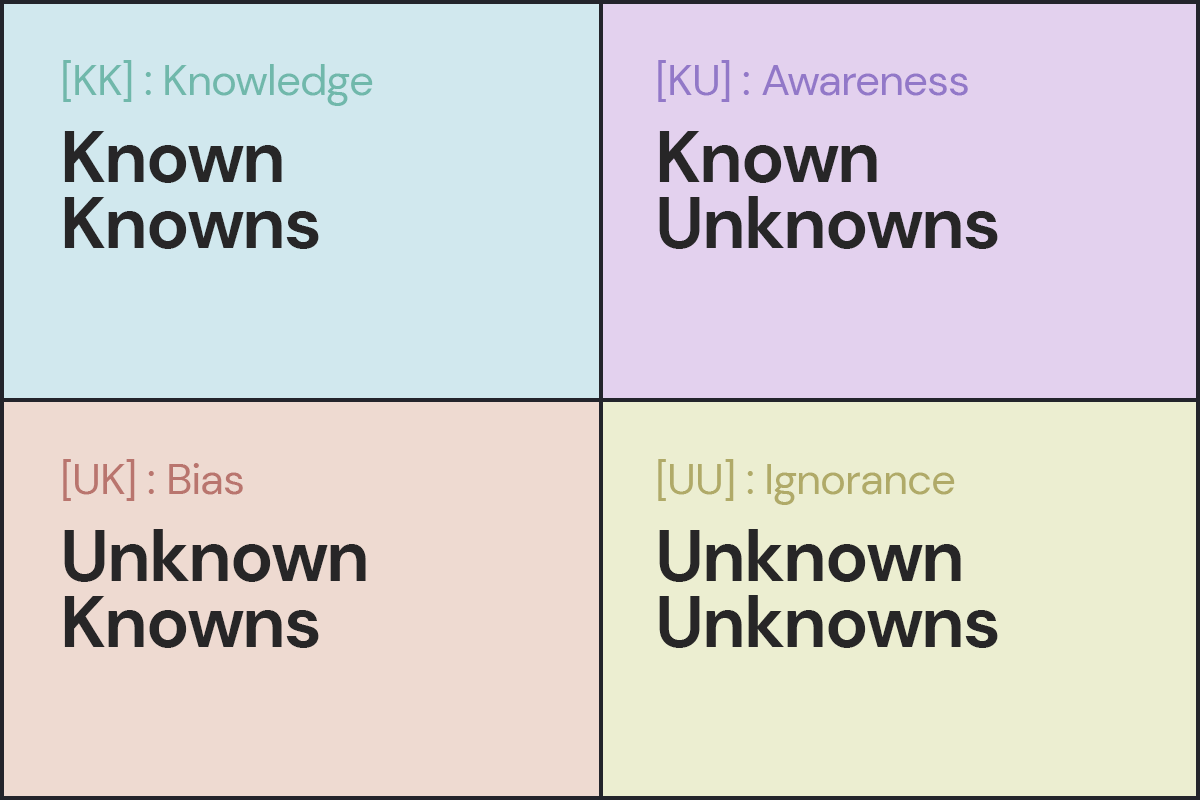
I feel like the Toupee Fallacy is lurking around in this conversation. We know how many cover-ups are successful, and the ones we know about are nearly universally unsuccessful.
Not disagreeing. Just pushing back on cover-ups being rational. In many cases, the cover-up wasn't worth it. "Full revelation of the underlying bad act" would have been utterly survivable, even taking into account the odds of getting away with no consequence.
Yeah, my feel is that the underlying act was often enough survivable, but it didn't feel like it at the time. A cover-up attempt in state of panic is opposite of rational (except maybe in terms of calming your own nerves).
Depends on the person. Panic has always biased me towards inaction: this is helpful in urgent circumstances (where waiting and thinking for a few minutes feels really bad, but is usually the right move unless someone's bleeding to death), but harmful in non-urgent circumstances (where there's only a few minutes' worth of thoughts to think about the situation, so waiting and thinking for a few months is completely counterproductive).
Guess some people like to play the odds. Rather than take 50% damage, they choose to gamble between 0% damage (cover up successful) and 100% damage (cover up failed and isn’t survivable) - they are equivalent in terms of expected value.
But they're not necessarily equivalent. If option a (0% damage) is equiprobable with option b (100% damage), then yeah, the expectation value is 50% damage. But if option b is 4 times more likely than option a, then the expectation value is 80% (1/5 *0 + 4/5*100 = 80). It's that misapprehension of the probabilities that is the error of the person failing to coverup a crime.
Just because there are only two possible outcomes doesn't mean that they are equiprobable. Not all coin tosses use a "fair" coin.
There are three outcomes in this hypothetical: don’t bother with the cover up (50% damage); successful cover up (0% damage); and failed cover up (100% damage). So the calculation is a bit more complicated.
Tangentially relevant, I have found that when people crash into my parked car, they universally attempt to cover up, and flee the scene. Inevitably they are on camera, and they end up paying for damage. This has happened multiple times. However, there is no extra punishment adminstered for the fleeing and the cover up. So (at least in Australia) you are universally incentivsed to try and coverup a vehicle hit and run, than you are to leave details. Sad.
You're right. To expand: don't bother is the null. Deciding to cover-up leads to one of two outcomes, the good one (you get away) and the bad (you get boned). You don't know which of those outcomes you'll get.
The percentages the comment you're responding to provides aren't probabilities, but damage fractions; 50% isn't a 50/50 likelihood, but 50% damage of the 100% case.
If your outcome is defined on a continuum, then the expectation value is the sum of product of (probability of some event times the outcome value of that event).
Fair coin flips have 50/50 odds. If we say that you get $100 if it comes up heads, and $0 if it comes up tails, then the expectation value for the money you'd have afterwards is $50=0.5*$100 + 0.5*$0.
If it was an unfair coin with 30% odds of coming up heads, then your expectation value is $30= 0.3*$100 + 0.7*$0. And so on. The fact that the outcomes are dollars or damage percentages is irrelevant to the calculation.
Except that in a lot of cases, a failed coverup incurs a few more felonies, so "don't bother" is closer to like 75%, while "failed cover up" is definitely 100%.
In terms of risk analysis, rationally considering a coverup is in the same ballpark as rationally considering shorting a stock, in the sense that making the wrong call can cost a whole bunch more.
I'd say failed cover up is 100% damage, but "don't bother" is under 100%. A failed cover up is always worse than the initial screw up. E.g. this exact case, which went from civil penalties (loss of pilot's license) to criminal (jail time) AND civil penalties due to the failed cover up.